
Troubles of all sort come throughout our lives – some develop
slowly over time, some happen suddenly and shockingly, some have a nasty habit
of reappearing time and time again. And while we wish we had a big bat with
which we can fight back – it’s not actually that simple.
In the last few weeks – we as a congregation have faced
trouble, have seen heartache and have weathered storms. Yesterday we assisted
with the funeral of a beautiful young girl, the daughter of one of our
families.
And the reality is that each of us, at some time, has gone
through trials and difficulties, has suffered and has journeyed through valleys
of pain and loss and heartache.
This morning I’m going to be looking at weathering storms.
Looking at what we can use to hold us and help us, to get our lives through
rough seas and dark clouds.
We will be looking at multiple readings this morning but I’m
going to start with one from the book of Mark – a well-known story of Jesus and
his disciples. Its Mark chapter 4 – and I’ll
be reading from verses 35-39
“That day when evening came, he said to his disciples, “Let
us go over to the other side.” Leaving the crowd behind, they took him along,
just as he was, in the boat. There were also other boats with him. A furious
squall came up, and the waves broke over the boat, so that it was nearly
swamped. Jesus was in the stern, sleeping on a cushion. The disciples woke him
and said to him, “Teacher, don’t you care if we drown?”
He got up, rebuked the wind and said to the waves, “Quiet! Be
still!
Then the wind died down and it was completely calm.”
May God bless to us this reading of his Holy Word.
Let us pray:
Father, as we come to your word this morning speak to our
hearts, guide us and encourage us. May the words of my mouth and the
meditations of all our hearts be pleasing to you and bring you glory. Amen.
The storms that happen in the sea of Galilee are fierce,
unpredictable and extremely dangerous to small boats. Because of the relatively
shallow waters, the winds are able to create a great disturbance. In our
reading we are told that the waves were breaking over the boat to the point of
them being swamped.
Storms have the ability to grab our attention, to question
life, at times to shake us to our core. Whether the waves carry labels of
illness, or financial strain, or broken relationships or loss – each of them
can frighten us, intimidate us and at times even leave us devastated and in
despair.
How do we survive in our little boats? If we are honest we
know we are fragile. The Bible describes us as grass – in 1 Peter 1 we read
“All people are like grass,
and all their glory is like the flowers of the field;
the grass withers and the flowers fall…”
and all their glory is like the flowers of the field;
the grass withers and the flowers fall…”
Those beautiful little flowers we see in the veld – we are as
fragile as that. And while we like to hold on to the idea of us being strong
and in control – it’ll often take just one wave to shake our strength, and we realise
that we have very little power at all.
But we do have some things that never change and are a gift
of strength to us as we journey on these seas – and the first is the gift of
hope as an anchor
Hebrews 6:19
reads:
 “We have this hope as an anchor for the soul, firm and
secure.”
“We have this hope as an anchor for the soul, firm and
secure.”
The hope
that we have is that this is not all there is. That while it may seem that what
we can see and touch here is the only reality – there is a beauty and reality
far more permanent and true than this.
And so our
hope rests in a God who not only created us, but who longs to be known by us. A
God who loves us so much that he became one of us that we might love Him. He
then died for us to enable us to live forever, and that we may know Him and
know his love.
He then
gives us his Spirit, who lives inside us as a promise, as a foretaste of what
awaits us when our journey here is finished.
And so we
have hope knowing that there is meaning and purpose behind all that happens. We
have hope because we know God has not left us but rather is intimately involved
in our lives. One of my favourite stories is of a painting depicting a burnt
down cottage, and in front of it an old man, who has clearly just lost all that
he has. Holding the hand of this old man is a young boy sobbing. The Title of
the painting is “Hush Child – God ain’t dead”.
We serve a
living God who is on the throne, and who has promised us that one day – all
that is wrong will be made right. That one day injustice, evil, cruelty and
heartache will be destroyed. That one day cancer and corruption and abuse and
slavery will be abolished… and that he will wipe every tear from our eyes and
there will be no more death or mourning or crying or pain for the old order of
things has passed away.
We do not
need to fear death for it has been conquered. Our anchor is lodged in the truth
of hope. No matter what waves and storms may beat our boat – our hope, our
anchor can hold firm.
As the old
hymn tells us
It is safely moored, ’twill the storm
withstand,
For ’tis well secured by the Saviour’s
hand;
And the cables passed from His heart
to mine,
Can defy the blast, through strength
divine.
We have an anchor that keeps the soul
Steadfast and sure while the billows
roll,
Fastened to the Rock which cannot
move,
Grounded firm and deep in the Saviour’s
love.
The second
gift we are given is the Word as our light.
Psalm
119:105 reads

 In stormy waters one of the most comforting sights for
a boat is the lighthouse. Not only is it a promise and encouragement of land
nearby, but it also provides guidance and direction around dangerous rocks and
shallow areas.
In stormy waters one of the most comforting sights for
a boat is the lighthouse. Not only is it a promise and encouragement of land
nearby, but it also provides guidance and direction around dangerous rocks and
shallow areas.
The young adults group that meets here on Tuesdays are
studying a group of psalms called the psalms of accent. And what we keep
discovering more and more is that every human emotion, every struggle seems to
be captured in the psalms. We have the writer crying out for deliverance, for
guidance, for favour. There are moments of questioning –
Will the Lord reject forever? Will he never show his favour again?
Why, O Lord, do you stand far off?
There are moments of great joy and trust–
Let the heavens rejoice, let the earth be glad, let the sea resound and all
that is in it; let the fields be jubilant and everything in them – Then all the
trees of the forest will sing for joy” Psalm 96:11-12
The Lord is my shepherd – I shall not be in want…” Psalm 23:1
God’s word for us can be as that lighthouse is – an
incredible source of encouragement and promise. But it also is His chosen way
of speaking and guiding and comforting us.
We can read of his faithfulness to David as he faced
giants and Daniel as he faced lions.
We can read of his provision as he leads his people
through dry and desert areas.
We can read of his power as we see Him create the world
and split the oceans.
We can read of his love as we look at a cross that he
went to for you and me.
And his word can be a light to us in dark places.
Going back to a verse that we read earlier from 1 Peter
“All people are like grass,
and all their glory is like the flowers of the field;
the grass withers and the flowers fall…”
and all their glory is like the flowers of the field;
the grass withers and the flowers fall…”
The last part of that verse reads – But the word of the
Lord will stand forever. The light never goes out.
We have hope as an anchor and his word as a light.
And finally, we have Jesus as a companion.
In our first reading for today in Mark 4, we read of
the disciples in the storm and in a boat that is ready to sink. And then we
read;
Jesus was in the stern.
 Jesus was there. While the storm was terrifying them
all – they had the creator of water and lakes and storms there with them.
Jesus was there. While the storm was terrifying them
all – they had the creator of water and lakes and storms there with them.
The disciples woke him and said
to him, “Teacher, don’t you care if we drown?”
He got up, rebuked the wind and said to the waves, “Quiet! Be still!
Then the wind died down and it was completely calm.”
I love the power in those words. He rebuked the wind and
said to the waves…
Our boats as they are tossed about by waves and storms,
always have Jesus in them. We are never alone.
“Never will I
leave you – never will I forsake you”
“Peace I leave with you, my peace I give to you.”
“I will not leave you orphans – I will come to you.”
“In this world you will have trouble – but be brave – I have overcome
the world.”
We are not made to weather storms alone. Not only is he
present with us in the boat – but he also understands. As he walked here among
us, as one of us, he experienced grief, betrayal, fear, exhaustion,
frustration, loneliness and pain. He is not a God who cannot sympathise or who
stands far off – but rather one who knows, who understands, who loves us – and
who has the power to change things.
And we are not by any means promised a storm free life.
We are not even promised that when we turn to Him that he’ll click his fingers
and everything will go smoothly as we would want.
There is a saying that says – “Sometimes God calms the
storm… sometimes he lets the storm rage and calms his child.”
The biggest storm is often the one that rages within
our hearts and in our souls. And in the midst of whatever rages around our
little boats – may we hear the words deep within – “Quiet. Be still.”
In the Narnia series, C. S. Lewis writes of Aslan, who
relates to the world of Narnia as Jesus does to our world. In the Voyage of the
Dawn Treader, the books characters are sailing a ship into unknown seas. They
come to a patch of darkness and in rowing into it find themselves in a
terrifying situation – a situation where their worst nightmares become reality.
They have rescued a man who has been trapped there for many years – and now are
struggling to get out themselves. In this dire situation Caspian, the King
turns to the ship’s captain Drinian:
"Drinian," he said in a very low voice. "How
long did we take rowing in? - I mean rowing to where we picked up the
stranger."
"Five minutes, perhaps," whispered Drinian. "Why?"
"Because we've been more than that already trying to get out."
Drinian's hand shook on the tiller and a line of cold sweat ran down his face. The same idea was occurring to everyone on board. "We shall never get out, never get' out," moaned the rowers. "He's steering us wrong. We're going round and round in circles. We shall never get out." The stranger, who had been lying in a huddled heap on the deck, sat up and burst out into a horrible screaming laugh.
"Never get out!" he yelled. "That's it. Of course. We shall never get out. What a fool I was to have thought they would let me go as easily as that. No, no, we shall never get out."
Lucy leant her head on the edge of the fighting top and whispered, "Aslan, Aslan, if ever you loved us at all, send us help now." The darkness did not grow any less, but she began to feel a little - a very, very little - better. "After all, nothing has really happened to us yet," she thought.
"Look!" cried Rynelf's voice hoarsely from the bows. There was a tiny speck of light ahead, and while they watched a broad beam of light fell from it upon the ship. It did not alter the surrounding darkness, but the whole ship was lit up as if by searchlight. Caspian blinked, stared round, saw the faces of his companions all with wild, fixed expressions. Everyone was staring in the same direction: behind everyone lay his black, sharply-edged shadow.
Lucy looked along the beam and presently saw something in it. At first it looked like a cross, then it looked like an aeroplane, then it looked like a kite, and at last with a whirring of wings it was right overhead and was an albatross. It circled three times round the mast and then perched for an instant on the crest of the gilded dragon at the prow. It called out in a strong sweet voice what seemed to be words though no one understood them. After that it spread its wings, rose, and began to fly slowly ahead, bearing a little to starboard. Drinian steered after it not doubting that it offered good guidance. But no one except Lucy knew that as it circled the mast it had whispered to her, "Courage, dear heart," and the voice, she felt sure, was Aslan's.”
"Five minutes, perhaps," whispered Drinian. "Why?"
"Because we've been more than that already trying to get out."
Drinian's hand shook on the tiller and a line of cold sweat ran down his face. The same idea was occurring to everyone on board. "We shall never get out, never get' out," moaned the rowers. "He's steering us wrong. We're going round and round in circles. We shall never get out." The stranger, who had been lying in a huddled heap on the deck, sat up and burst out into a horrible screaming laugh.
"Never get out!" he yelled. "That's it. Of course. We shall never get out. What a fool I was to have thought they would let me go as easily as that. No, no, we shall never get out."
Lucy leant her head on the edge of the fighting top and whispered, "Aslan, Aslan, if ever you loved us at all, send us help now." The darkness did not grow any less, but she began to feel a little - a very, very little - better. "After all, nothing has really happened to us yet," she thought.
"Look!" cried Rynelf's voice hoarsely from the bows. There was a tiny speck of light ahead, and while they watched a broad beam of light fell from it upon the ship. It did not alter the surrounding darkness, but the whole ship was lit up as if by searchlight. Caspian blinked, stared round, saw the faces of his companions all with wild, fixed expressions. Everyone was staring in the same direction: behind everyone lay his black, sharply-edged shadow.
Lucy looked along the beam and presently saw something in it. At first it looked like a cross, then it looked like an aeroplane, then it looked like a kite, and at last with a whirring of wings it was right overhead and was an albatross. It circled three times round the mast and then perched for an instant on the crest of the gilded dragon at the prow. It called out in a strong sweet voice what seemed to be words though no one understood them. After that it spread its wings, rose, and began to fly slowly ahead, bearing a little to starboard. Drinian steered after it not doubting that it offered good guidance. But no one except Lucy knew that as it circled the mast it had whispered to her, "Courage, dear heart," and the voice, she felt sure, was Aslan's.”
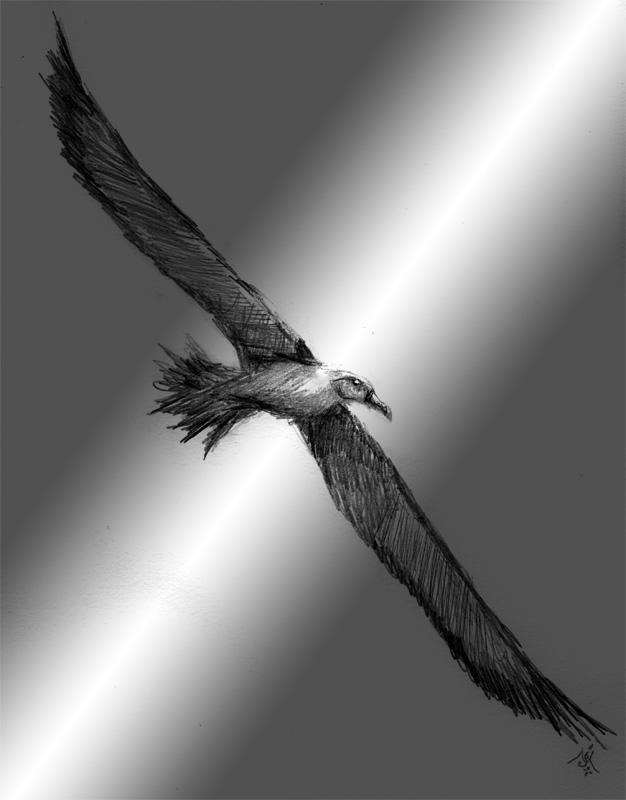
Courage dear
heart.
In life
storms will come – some will do damage to our boat, some may even feel as
though they may overwhelm us. But as the disciples saw, as Lucy found out – we
are never alone. We have Jesus as our companion.
Three things
to hold us together – to enable us to weather storms. We have hope as an anchor
firm and secure. We have the Word as our light to encourage and comfort. And
above all, we have Jesus as our companion.
And Jesus
says, “In this world you will have
trouble – but be brave, I have overcome the world.”
Courage dear
heart.
Let us pray.


